Missouri 2026 Amendment 4: The Will of the People
Amendment 4 is a power steal from the citizens to the legislature
Introduction
Of the four amendments on the ballot that will appear on the ballot August 4, 2026, this is the one that I believe will be closest to a 50-50 split. Unlike the other three, this amendment has a pretty clear partisan divide among voters due to the current state of power in Missouri. Let’s take a look at what this amendment says and argue about its merits. Ultimately, I hope to show why I believe a ‘NO’ vote is the best option for all Missourians.
Full Text
Here is the official ballot summary1 and fair language2:
Official Ballot Title:
Shall the Missouri Constitution be amended to:
Modify current requirements that a statewide majority of voters may approve initiative petitions to amend the constitution;
Require a majority of voters in each congressional district to approve initiative petitions to amend the constitution; and
Make available to each voter the full text of initiative petitions with their ballot?
The Department of Corrections estimates increased annual costs of up to $21,817. The Office of State Public Defender estimates an unknown fiscal impact. Other state governmental entities estimate no costs or savings. Local governmental entities estimate no costs or savings.
*** Fair Ballot Language:***
A “yes” vote will amend the Missouri Constitution to:
modify current requirements of Article III and Article XII that a simple statewide majority of voters may approve initiative petitions to amend the constitution;
require a majority of voters in each congressional district to approve initiative petitions to amend the constitution; and
make available to each voter the full text of initiative petitions with their ballot.
A “no” vote will not amend the Missouri Constitution to require majority approval in each congressional district for initiative petitions to amend the constitution or make available the full text of initiative petitions with the ballot.
If passed, this measure will not increase or decrease taxes.
Background
Currently, amendments follow a fairly simple majority vote across the state3. If a ballot measure gets 50% + 1 votes, the measure is passed. Else, the measure fails. However, it needs to be clearly stated that Amendment 4's scope does not refer to all amendments that reach the ballot, only initiative petitions. These are measures that are brought forth by the citizens through a signature collecting process. The state legislature also has a way of proposing amendments4, but that process is not affected by Amendment 4.
Currently there are 8 congressional districts in Missouri. A ‘Yes’ vote for this amendment would mean that each district would have to have a simple majority approve the measure, rather than a state-wide majority. The ultimate outcome of this amendment would really mean that citizen-led petitions would have an extremely high burden to pass because any single district could veto the other 7.
Additionally, there actually is more to this ballot than just the aforementioned changes. If you look at the full text5, there are also changes that relate to petition fraud and foreign influence, but given that these don’t appear in the official summary, you would rightly assume that these are your typical ‘ballot candy’6 like changes that are meant to influence people to vote yes. Petition fraud is already illegal, you can already view the full text of the ballot, etc. Try not to be misled by these additional arguments, the majority vote is the main idea here, don’t get distracted by the little changes. The ballot candy was so bad in the original proposed summary that a judge forced the summary to be re-written7.
Arguments
Here are the arguments for a ‘YES’ vote:
-
The bar should be higher for constitutional amendments. This is an understandable argument. Looking at the U.S. Constitution as a guide, you would expect that state constitutions should function in a similar manner, but in reality, most states that allow for initiatives do allow for a lower bar than a supermajority8.
-
The initiative process is being misused. While the above argument is the one that supporters of Amendment 4 will be most publicly stating, I suspect this is the real reason. Recently, Republicans have had fairly strong control over Missouri for about the last 25 years. This includes supermajority control over both the House9 and the Senate10. The simple fact is that due to recent liberal legislation that has passed as amendments (gambling, abortion, marijuana, etc.), Republicans are eager to make it harder for these voices to be heard and want to stop letting any citizens, even their own party members, from having a say in the constitution.
Here are the arguments for a ‘NO’ vote:
-
This change is driven by partisan ideology. As I stated above, the real crux of this issue is that the Republican-controlled legislature does not want liberal legislation slipping in through these amendments. Additionally, if Missouri someday changes to having a Democrat-controlled legislature, Republican voices would be unable to petition as well, so this amendment is a double-edged sword.
-
Election influence would be worse with this voting scheme. This is actually the biggest reason that I would argue that a Republican should consider when making a decision here. Currently in order to pass an amendment, you need to influence people at-large. Even just people in St. Louis are not enough, you have to get a substantial number of voters from multiple cities and rural areas across this state. This amendment would actually make influence easier because now an opposing group just needs to pour money into any one area of the state in order to get it to fail. Despite being one of the potential perks of this amendment, a ‘YES’ vote means that outside influence would be easier in Missouri, not harder.
-
Ballot candy should make you suspicious. Any time there is a substantial amount of ballot candy on a bill or amendment, your eyebrows should raise. This is exactly what happened a couple years ago when we banned ranked-choice voting by pairing it with a provision that made it illegal for non-citizens to vote. Despite it already being illegal, we felt the need to make it double-illegal and also kill ranked-choice voting at the same time. Too many good-sounding ideas on a ballot just means that someone is trying to sneak something past you. Don’t fall for it.
Conclusion
This amendment is a solution seeking a problem. Not until recent legislation passed did the legislature have a problem with citizen petitions, but as soon as a few liberal amendments got into the constitution there was a major problem. This amendment would weaken the power of regular citizens, make amendments more prone to outside influence, and overly complicate our voting process.
Official Recommendation: NO
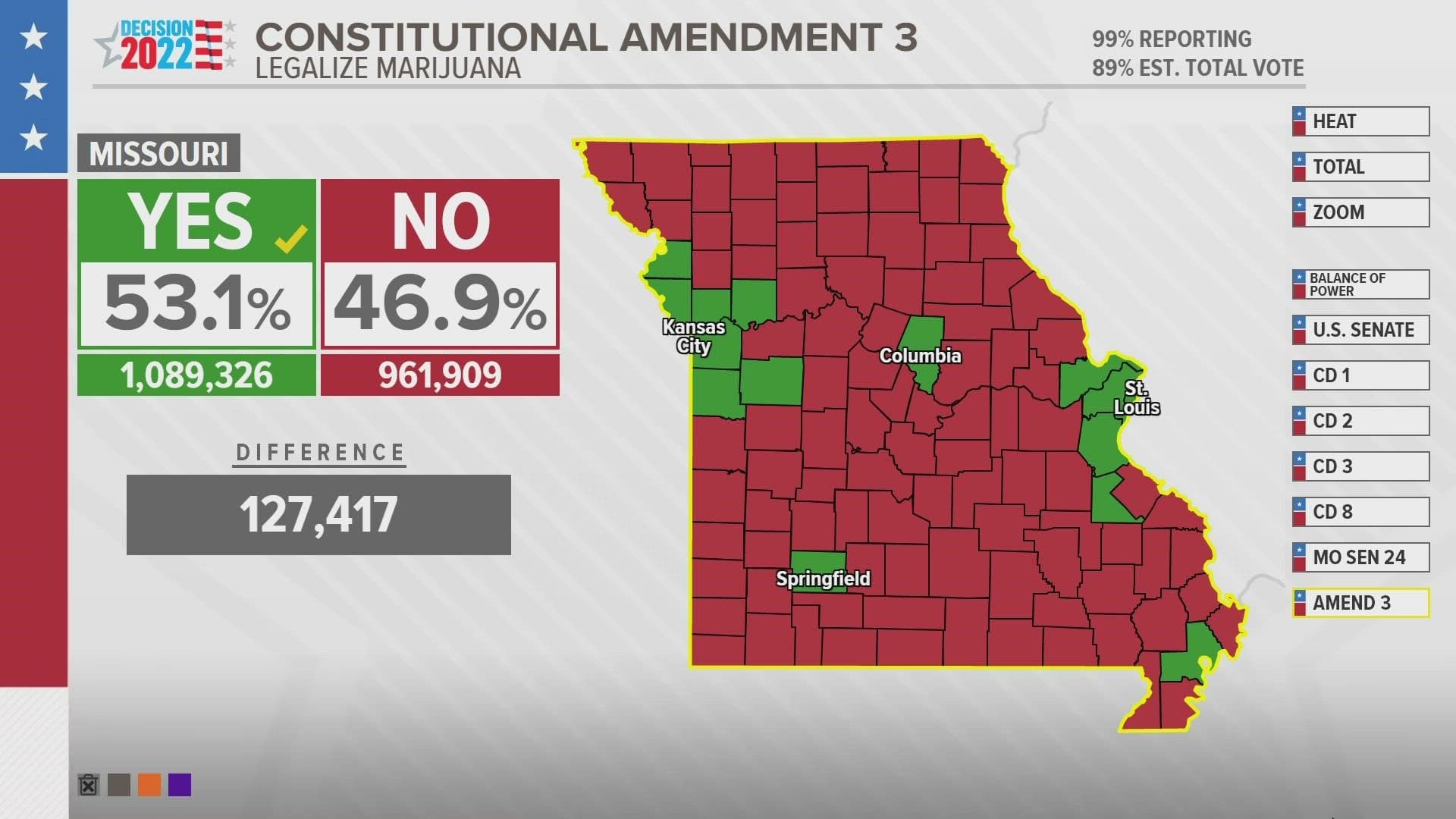
(Note: Cover image sourced from KSDK)
References
Comments (0)
Join the conversation
Sign in with your Google account to comment and interact with other readers.